

If you’re stretching a paycheck to cover rent, gas, and groceries right now, you’re not alone. And, you’re definitely not imagining the squeeze. Costs have climbed across the board over the past couple of years, and wages haven’t always kept pace.

Add to that unexpected and unplanned costs, such as a car repair or vet bill, and you’re likely feeling overwhelmed. In this environment, it’s common to quietly wrestle with this question: should I even be locking money away in a 401(k), or would I be better off keeping my savings somewhere I can actually get to it?
While there’s no one-size-fits-all answer, understanding how these two tools actually work can help you make a decision that fits your real life of increased expenses and emergency events.
The Numbers Behind the Squeeze
First, let’s acknowledge upfront… this isn’t just a feeling. The data backs up what a lot of households are experiencing right now:

- Roughly two-thirds of American consumers were living paycheck to paycheck in early 2026, according to PYMNTS and LendingClub’s ongoing tracking survey, this rate has held between about 60% and 70% since 2024. But, as expected, the pressure isn’t evenly spread. Ramsey’s Q1 2026 State of Personal Finance report found the rate climbs to 74% among lower-income households, 65% among people carrying consumer debt, and roughly 6 in 10 for both millennials and Gen Z.
- More than a third of Americans still couldn’t cover a surprise $400 expense with cash, savings, or a credit card they’d pay off right away. According to the Federal Reserve‘s most recent Survey of Household Economics and Decision-making , this figure has stayed stubbornly flat for several years running.
- A record share of workers are tapping their 401(k)s early. Vanguard’s “How America Saves 2026” report found that 6% of participants took a hardship withdrawal in 2025 — the highest share on record, up from roughly 5% the year before, and about three times the pre-pandemic norm of around 2%.
- Loan usage is climbing too, though more slowly. Fidelity reported that 19.4% of 401(k) participants had an outstanding loan against their account in 2025, up from 18.9% in 2024. Interestingly, loan usage has actually stayed below pre-pandemic levels even as straight hardship withdrawals hit new highs. This is largely because a 2018 rule change made it easier to withdraw funds directly for a hardship without taking out a loan first.
Put together, these numbers tell a clear story: it’s not a small, unusual group of people dipping into retirement savings under pressure, it’s a growing and fairly mainstream response to real financial strain.
One family found themselves borrowing from parents to refund an existing 401(k) loan, just to be eligible to secure a larger loan to make ends meet. That’s exactly why it’s worth understanding the trade-offs clearly, rather than treating it as a personal failure.
The Core Difference: Growth vs. Access
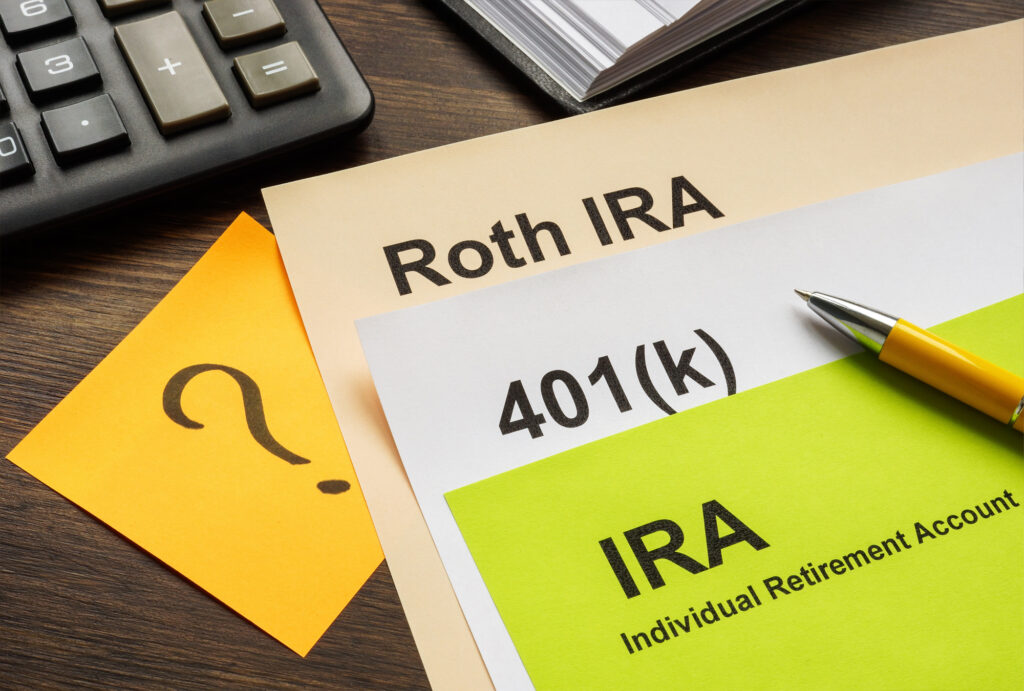
A 401(k) is a retirement account, usually offered through an employer, that lets you contribute pre-tax (or in some cases after-tax, with Roth 401(k)s) dollars that grow over decades. The money is typically invested in a mix of mutual funds, index funds, or target-date funds, meaning it can grow significantly over time. That said, it can also lose value in the short term when markets dip. Critically, this money is meant to stay put until retirement age. Pull it out early, and you’ll generally face taxes plus a 10% early withdrawal penalty, unless you qualify for a specific exception.
A money market account (MMA), on the other hand, is a savings vehicle offered by banks and credit unions. An MMA holds cash and pays a modest interest rate, often higher than a standard savings account. It’s liquid, meaning you can withdraw funds relatively quickly, though some accounts limit the number of withdrawals per month. It’s not designed for growth in the way a 401(k) is; it’s designed for safety and access.
In short: 401(k) = long-term growth, tax advantages, limited access. Money market = short-term safety, easy access, modest returns.
Why This Question Matters More Right Now
When rent, gas, and grocery bills are eating a bigger share of your income, it makes sense that having access to liquid savings is more appealing than long term savings. If an emergency hits, you want money you can reach without penalties or paperwork. A 401(k) isn’t built for that kind of access, and treating it as an emergency fund can create real long-term costs.
But here’s the trade-off: money sitting in a money market account, even a good one, is unlikely to keep pace with inflation over time. It’s safe, but it’s not really working for your future in the way retirement investments can. The comfort of liquidity comes at the cost of growth potential.

What Happens When People Borrow From Their 401(k)
This is where things get complicated, and it’s worth being honest about it: a lot of people do end up borrowing from their 401(k) when they hit a cash crunch, because it can feel like the only accessible pool of money they have.
Here’s what that typically involves:
- You’re borrowing from yourself, but with real strings attached. Most plans let you borrow up to 50% of your vested balance (capped around $50,000), and you repay it with interest. However, unlike the interest paid back to a bank or credit union, this interest goes back into your own account.
- The money isn’t invested while it’s out. While your loan is outstanding, that portion of your account isn’t in the market, so you miss out on any growth (or avoid any losses) during that period. Over years, missed compounding can add up meaningfully.
- Job loss or job change can accelerate repayment. If you leave your employer whether by choice or not, many plans require the outstanding loan balance to be repaid quickly, sometimes within the same tax year. If you can’t repay it, the remaining balance is treated as a distribution, triggering taxes and potentially the 10% early withdrawal penalty.
- It can quietly reduce future contributions. Some people pause new 401(k) contributions while repaying a loan, which means missing out on employer matching, So, you essentially leave free money on the table during that stretch.
Borrowing from a 401(k) can put someone at a long-term disadvantage. This is particularly true if it becomes a repeated pattern, if the person changes jobs while the loan is outstanding, or if contributions get paused for an extended period. That said, it’s also not automatically catastrophic. A 401(k) loan is generally less damaging than high-interest credit card debt or a payday loan, and for some people facing an acute cash crunch, it’s a genuinely better option than the alternatives available to them.

A More Balanced Way to Think About It
Rather than framing this as “401(k) vs. money market,” a lot of financial educators suggest thinking about it in layers:
- Build at least a small liquid cushion first. Even $500–$1,000 in a money market or high-yield savings account can prevent a minor emergency from turning into a 401(k) loan or high-interest debt.
- Contribute enough to your 401(k) to get the full employer match, if one is offered. That match is essentially an immediate, guaranteed return that’s hard to replicate anywhere else, so walking away from it has a real cost.
- Grow your liquid savings alongside retirement contributions, not instead of them, as your budget allows. It doesn’t have to be all-or-nothing.
- Treat 401(k) loans as a genuine last resort, understanding the specific risks around job changes and paused growth — not because they’re “bad,” but because the trade-offs are easy to underestimate in the moment.

The Bottom Line
If you find yourself living paycheck to paycheck right now, wanting accessible savings isn’t shortsighted. It’s actually a reasonable response to real financial pressure. The goal isn’t to shame anyone for prioritizing liquidity. It’s to go in clear-eyed. Money market accounts offer safety and access but limited growth, and 401(k)s offer growth and tax advantages but limited access. And, borrowing against retirement savings can solve a short-term problem while quietly creating a longer-term one. Knowing the actual mechanics, not just the general advice, is what lets you make the choice that’s right for your own situation.
Need help sorting through your financial picture and creating a balanced way to keep your head above water, reach out to one of our 1166 FCU certified financial counselors.